Double Life, Deeper Art: Why Living Between Two Worlds Makes You a Better Creator
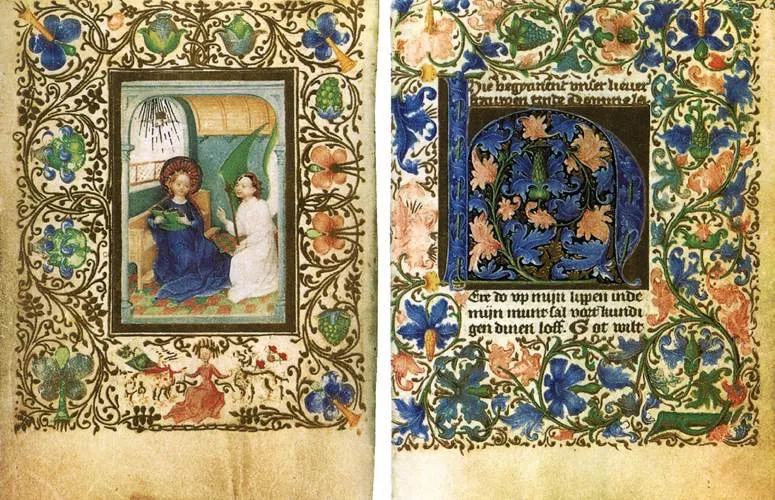
Photo: Stefan Lochner, Public domain, via Wikimedia Commons
There's a story we love to tell about artists. You know the one. They quit everything, move somewhere cheap and gritty, and pour every waking hour into the work. No distractions. No compromises. Just pure, uncut creative devotion. It's a good story. It's also, for most people, a trap.
Because here's the thing nobody really talks about: some of the most urgent, emotionally loaded, genuinely alive creative work in existence came from people who were living double lives. The warehouse worker finishing paintings at 2 a.m. The nurse writing lyrics on her lunch break. The accountant who produces beats in a closet studio every weekend. These aren't people waiting to go all-in. They're people drawing from two wells at once — and the tension between those wells is exactly what makes the water taste different.
The Myth of Total Immersion
We've been sold this idea that full creative immersion equals better creative output. That if you just had more time, more space, more freedom from obligation, the work would finally become what it's supposed to be. But immersion without friction can quietly flatten things out.
When your entire identity collapses into the art, the art can start to feel like a job — not the day job you're trying to escape, but a different kind of pressure. The pressure to justify the sacrifice. To make something worthy of all that you gave up. That weight doesn't always produce brilliance. Sometimes it just produces paralysis.
Contrast that with the person who has exactly two hours on a Tuesday night. They're not agonizing over whether the work is significant enough. They're just making something before the alarm goes off. There's a rawness to that. A necessity. You can hear it.
Two Worlds, One Voice
The most interesting creative tension isn't between success and failure — it's between the life you're living and the life you're making art about. When those two things are different, you get perspective. You get distance. You get the kind of specific, grounded detail that makes a piece of music or a painting or a poem feel like it came from somewhere real.
Think about the long tradition of American working-class music. Bruce Springsteen wasn't writing about factory floors because he thought it was a cool aesthetic. He was writing from inside a particular kind of life, even as he was trying to build a different one. That in-between space — not fully one thing, not fully another — gave the work its emotional charge. The longing felt real because it was real.
Today's version of that looks different. It might be the content creator who works a corporate marketing job by day and makes deeply personal short films on weekends. Or the producer who teaches high school music and drops projects on SoundCloud that sound nothing like anything his students are listening to. The day job isn't separate from the art. It's feeding it, whether they know it or not.
The Side Door Into Your Best Ideas
Here's something worth sitting with: the thing you do to pay the bills is probably giving you material you couldn't manufacture on purpose. The weird coworker. The commute that lets you think. The moment at the register or the desk or the job site when something clicks and you reach for your phone to voice-memo an idea before it disappears.
That's not a distraction from creativity. That's creativity operating in the wild.
Some creators have started to recognize this deliberately. They protect their day jobs — or at least some version of a structured outside life — because they've noticed what happens when they don't. The work gets precious. It gets self-referential. It starts talking to other art instead of talking to actual human experience.
Living inside two different realities keeps you honest. It keeps the work grounded in something outside itself.
The 'Boring' Life Is a Secret Weapon
Let's talk about the so-called boring life for a second, because it gets a bad reputation it doesn't deserve.
Routine, stability, the quiet predictability of a life that isn't in constant chaos — these aren't enemies of creativity. For a lot of artists, they're the container that makes creation possible. You can't pour from a cup that's always tipping over. The person who wakes up at the same time every day, handles their responsibilities, and then sits down to make something in the margins of that structure? They're often more productive than the person whose entire life is theoretically devoted to the art but who can't find the edges of anything.
There's also something emotionally nourishing about having a life that isn't entirely about the work. Relationships, community, the small rituals of a regular existence — these fill you back up. They give you things to say. They remind you why any of this matters in the first place.
Contradiction as Creative Fuel
The parallel life isn't a compromise. It's a composition.
Some of the most compelling creators working right now aren't interesting because they went all-in. They're interesting because they refused to let go of the other thing — the part of themselves that exists outside the art, that has opinions about the commute and the grocery store and the argument they had last Thursday. That contradiction, that refusal to be only one thing, is what makes the work feel like it comes from a full human being instead of a creative persona.
If you're living between two worlds right now — the one that pays and the one that calls — that's not a problem to solve. That's the material. The gap between who you are at 9 a.m. and who you are at midnight is where some of your most honest work lives.
You don't have to burn everything down to find it. You just have to be here, in both places at once, paying attention.
That's the whole thing, really. Be here now — even when here is complicated.