Rooted and Rising: How Staying in Your Lane Became the Boldest Move in Music
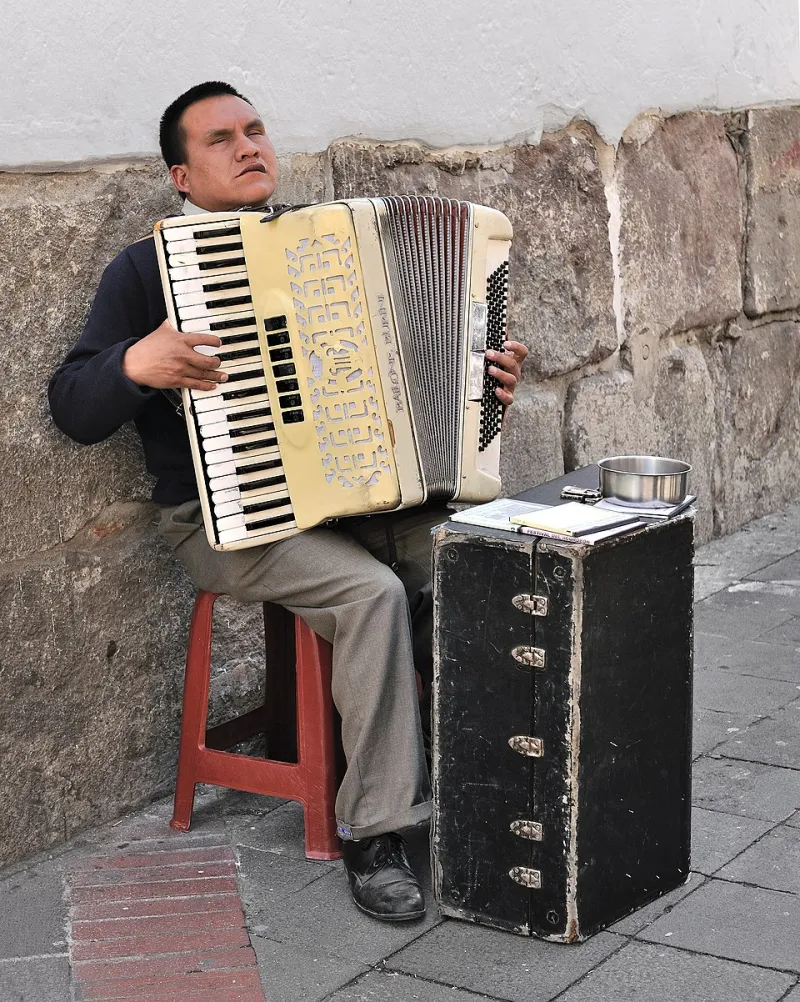
Photo: Cayambe, CC BY-SA 3.0, via Wikimedia Commons
Everybody's got an opinion about what you should do next. Drop a new sound. Shift your aesthetic. Collaborate with someone unexpected. The music industry runs on the idea that momentum requires movement — constant, visible, preferably viral movement. But somewhere in the middle of all that noise, a different kind of artist is quietly building something that lasts.
They're not pivoting. They're not rebranding. They're just going deeper.
The Reinvention Trap
There's a version of creative advice that sounds like wisdom but functions more like anxiety. "Evolve or die." "Stay relevant." "Give people something new." On the surface, it makes sense — audiences get bored, algorithms reward novelty, and the cultural conversation moves fast. But there's a cost to chasing all of that, and it's one a lot of artists don't talk about until they're burned out and three sonic identities removed from the thing that made them fall in love with music in the first place.
The reinvention pressure is real, and it hits especially hard in the US market, where pop culture cycles are notoriously short and the appetite for the "new" can feel insatiable. Artists watch peers get praised for bold left turns and start questioning whether their own steady path is actually a slow fade into irrelevance.
But here's the thing: reinvention is only impressive when you had something solid to begin with. And for the artists who stay rooted? That foundation keeps compounding.
Depth Over Distance
Think about the creators who've built genuinely devoted fanbases — not viral moments, but real communities of people who show up year after year. More often than not, those artists aren't the ones who zigged and zagged. They're the ones who went further into their own world instead of expanding outward into someone else's.
Jason Isbell didn't soften his Americana sound to cross over. He sharpened it. Julien Baker has stayed in the same emotional territory — raw, confessional, deeply personal — across multiple albums, and her audience hasn't shrunk. It's grown, and it's intensely loyal. Freddie Gibbs has spent over a decade making the same essential argument about who he is and where he comes from, and the respect he commands now is the kind that doesn't come from a rebrand.
These aren't artists who got lucky by standing still. They made a deliberate choice to trust their instincts over industry pressure, and they did the hard work of going deeper into their craft rather than broader in their appeal.
What "Staying True" Actually Looks Like
It's worth separating two things that often get confused: staying true to your vision and refusing to grow. They're not the same thing, and the artists who do this well understand the difference.
Staying true to your vision means your core identity — your sound, your themes, your aesthetic values — remains recognizable and intentional. It means your tenth project feels like it was made by the same person as your first, even if the execution is more refined, more confident, or more complex.
Refusing to grow looks different. It's defensive. It's reactive. It's making the same record over and over because you're afraid of losing the audience you have.
The artists who thrive through consistency aren't frozen in time. They're more like a tree than a snapshot — the roots stay put, but the branches keep reaching. Their growth is vertical rather than lateral. They're not adding new genres to their résumé; they're getting better at the one thing they already do.
The Audience That Finds You
There's a specific kind of fan that consistency attracts, and it's the kind most artists would trade a million casual streams for. These are the people who don't just like your music — they feel understood by it. They come back because your work has become part of how they make sense of their own lives.
That relationship doesn't develop through novelty. It develops through recognition. When someone hears your new release and thinks, yes, this is exactly what I needed from you right now — that's not because you surprised them. It's because you delivered on a promise you've been making since the beginning.
In a landscape where attention is fragmented and parasocial relationships are increasingly transactional, that kind of deep resonance is genuinely rare. And it almost always belongs to artists who had the patience to build it slowly, track by track, show by show, without taking a detour to chase someone else's moment.
The Algorithm Doesn't Know Your Career
One of the sneakier forces pushing artists toward constant reinvention is the data. Streaming numbers, playlist placements, social engagement — all of it creates a feedback loop that rewards short-term spikes over long-term depth. And when your numbers dip after a release that stayed true to your sound, it's easy to read that as confirmation that you need to change.
But the algorithm is measuring the wrong thing. It can't measure the fan who's been listening to your catalog on repeat for three years. It can't measure the person who drove four hours to see you play a 200-cap venue because your music meant something specific to them during a hard season. It can't measure the kind of word-of-mouth that builds slowly and then, one day, fills a room you never thought you'd fill.
The artists who understand this don't ignore the data — they just refuse to let it make their creative decisions for them.
Here, and Still Here
There's something worth sitting with in the phrase Mono Is Here. Not "Mono went somewhere else" or "Mono became something new." Just: here. Present. Committed to this moment, this sound, this version of the work.
That kind of presence is its own statement. In a culture that constantly asks creators to move on, showing up as yourself — fully, consistently, without apology — is a quiet form of resistance. And over time, it becomes something more than that. It becomes a legacy.
The artists who last aren't always the ones who changed the most. Sometimes they're the ones who had the courage to stay exactly where they were and let the world eventually catch up to them.
Staying put isn't giving up. For the right artist, with the right vision, it might just be the most powerful move in the room.