Always On, Never Present: Why Constant Content Is Quietly Draining Your Creativity
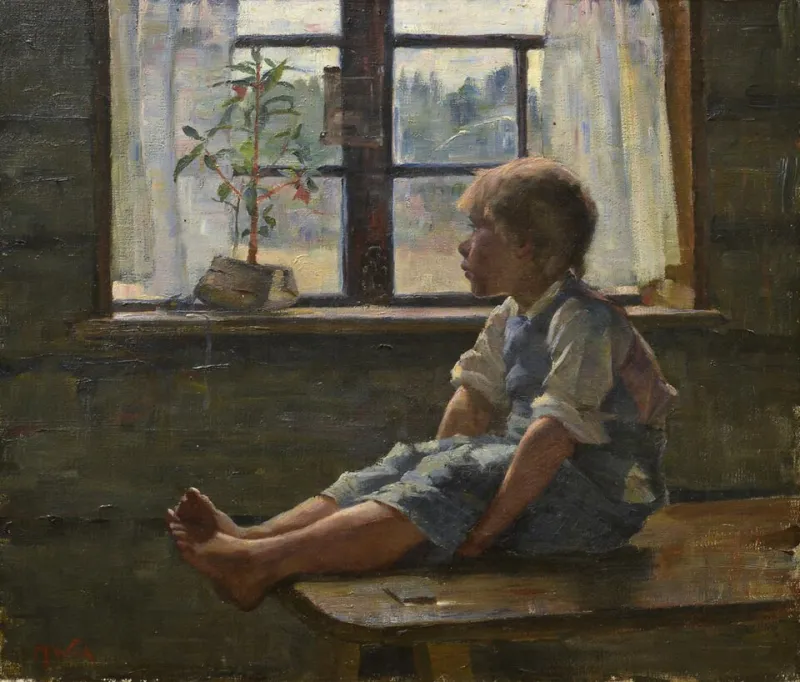
Photo: Maria Wiik, Public domain, via Wikimedia Commons
There's a version of success that looks incredible from the outside. You're posting daily. Your stories are full. Your feed is curated, your engagement is up, and your follower count keeps climbing. You're everywhere, all the time — which is exactly what every brand strategist, every growth hack newsletter, and every "build in public" guru told you to be.
So why does it feel like your actual work is getting worse?
This is what some are calling the authenticity paradox — the strange, uncomfortable truth that the more aggressively you perform your creative life online, the less creative energy you actually have left to do the thing that made people care about you in the first place.
The Brain Doesn't Work on a Content Calendar
Here's the neurological reality: your most original ideas don't come from hustle. They come from rest.
Researchers who study the default mode network — the part of the brain that activates when you're not focused on a task — have found that this is where imaginative thinking, emotional processing, and creative synthesis actually happen. When you're daydreaming, spacing out in the shower, or just sitting somewhere without your phone, your brain is doing heavy lifting you can't see.
The problem? Constant content creation keeps your brain locked in task-execution mode. You're always producing, always optimizing, always reacting to notifications and comments and analytics. The default mode network barely gets a chance to fire.
Dr. Mary Helen Immordino-Yang, a neuroscientist at USC who has studied the relationship between rest and identity development, has described this idle brain time as essential to "the neural basis of constructing a conscious self." In other words, knowing who you are — and what you actually want to make — requires doing nothing for a while.
For creators, that's not a luxury. It's infrastructure.
The Pressure to Document Is Real — and It's Warping the Work
Talk to almost any working musician, visual artist, or writer who has built a meaningful following over the past decade, and you'll hear a version of the same story. There was a moment — usually around the time they started gaining traction — when the pressure to document their process started competing with the process itself.
One indie artist from Brooklyn described it this way: "I used to finish a song and feel this quiet satisfaction, like I'd made something real. Then I started posting about the songs before they were done, sharing voice memos and studio clips, and suddenly I couldn't tell if I was making music or making content about making music. Those aren't the same thing."
Brand strategists who work with creative clients are noticing the same pattern. The creators who tend to build the deepest, most durable connections with their audiences are rarely the ones who post the most. They're the ones who post with intention — who disappear for a while, make something substantial, and then resurface with something that actually means something.
The constant-content approach, meanwhile, can actually erode trust. Audiences are perceptive. They can feel the difference between a creator who is genuinely excited to share something and one who is feeding the algorithm out of anxiety. And that anxiety tends to flatten the work into something safe, something repeatable, something that performs.
Visibility Without Depth Is Just Noise
Here's a hard truth about personal branding in 2024: being everywhere doesn't mean people actually know you.
There's a difference between visibility and presence. You can have millions of impressions and still feel invisible to your audience in the ways that matter. Real connection — the kind that turns a casual follower into someone who actually cares about your next project — tends to come from moments of genuine depth, not volume.
Some of the most devoted creative communities online have formed around artists who are selective about what they share. They go quiet when they're working. They reemerge with something fully realized. And because their audience hasn't been fed a constant drip of content, there's actual anticipation. There's a reason to pay attention.
This isn't about being mysterious for the sake of it. It's about protecting the conditions that make good work possible, and trusting your audience enough to believe they'll wait for something worth their time.
What Stepping Back Actually Looks Like
None of this means you should delete your accounts, ghost your audience, or abandon the platforms where you've built community. It means being thoughtful about the relationship between your public presence and your private creative life.
A few things that working creators have found actually help:
Separate your making time from your sharing time. Don't document while you're in the middle of creating. Let the work breathe before you decide what — if anything — to share about it.
Get comfortable with gaps. Not every week needs a post. Not every project needs a rollout. Sometimes the most powerful thing you can do for your brand is trust that the work will speak when it's ready.
Notice what you're making versus what you're performing. There's nothing wrong with sharing your process, but check in regularly: are you doing this because it feels genuine, or because you're afraid of what happens if you go quiet?
Protect your off-screen time like it's a creative resource — because it is. Walks, conversations, reading, sitting with music you didn't make — these aren't breaks from your creative practice. They're part of it.
Being Here Now Means Sometimes Not Being Online
There's something almost ironic about this, especially for a platform called Mono Is Here. Being here — fully present, fully engaged, fully yourself — is exactly what gets lost when you're always performing presence for an audience.
The creators who last, the ones who build something that genuinely resonates over time, have usually figured out that the work comes first. The content is a window into the work, not a replacement for it.
You don't have to be everywhere to matter. You just have to make something real, and then actually show up when you do.