Burn the Blueprint: What Happens When an Artist Outgrows Their Own Origin Story
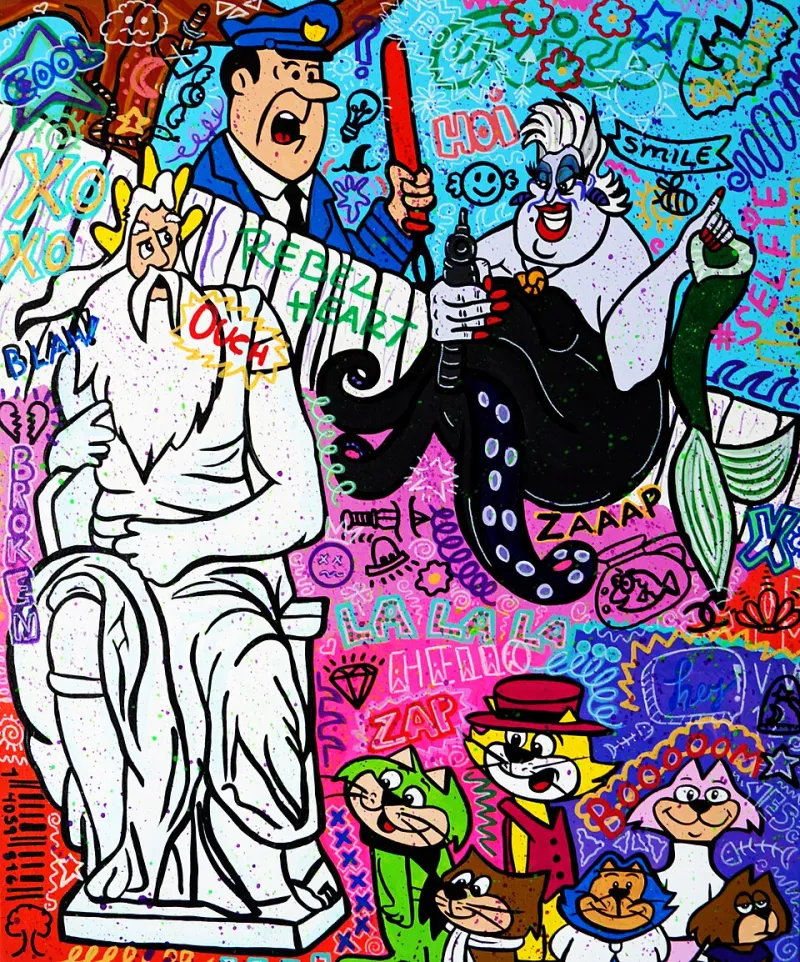
Photo: HonysTorresArt, CC BY 4.0, via Wikimedia Commons
There's a version of artistic growth that looks clean from the outside. A little sonic experimentation here, a slightly bolder visual palette there. Fans nod along. Critics call it "maturation." Everyone moves forward together, comfortable.
And then there's the other kind.
The kind where an artist looks at everything they built — the sound, the aesthetic, the entire identity that got them in the room — and decides, quietly or loudly, that it no longer belongs to them. Not because they burned out. Not because the industry pushed them somewhere new. But because they found something that fit better, and they couldn't un-find it.
That's the redirect. And it's one of the most disorienting, courageous things a creative person can do.
The Myth of the Consistent Brand
We talk a lot about consistency in creative spaces. Build a recognizable style. Stay in your lane. Give your audience something they can count on. And sure, there's real wisdom in that — especially early on, when you're trying to cut through noise and establish a presence.
But consistency can quietly become a cage.
When your audience falls in love with a specific version of you, there's an unspoken contract that forms. They expect that version to keep showing up. And the longer you deliver it, the heavier that expectation gets. Some artists spend entire decades performing a self they quietly left behind years ago, because the exit door feels too scary to walk through.
The ones who do walk through it, though? They tend to make the most interesting work of their lives on the other side.
Grieving the Old Self (Yes, It's Real)
Here's something that doesn't get talked about enough: when you change directions as an artist, you lose something. Even if the new path is better — even if it's more you — there's grief in leaving behind the work that defined your early years.
That debut album that felt like your whole heart at 22. The visual style you developed over hundreds of hours of practice. The community that formed around a specific version of your creative voice. Pivoting away from those things isn't a clean break. It's more like a slow exhale that takes longer than you expect.
Some artists describe it as mourning a close friend who didn't die — they just drifted. You can still see them in old photos. Fans still bring them up. But you know, internally, that you're not that person anymore.
The grief is real, and pretending it isn't is part of why so many creators stall mid-pivot. They're not just changing direction — they're processing a kind of creative loss while simultaneously trying to build something new. That's a heavy lift.
The Fan Problem Nobody Warns You About
Let's be honest about something: some fans will not come with you.
This is one of the quieter heartbreaks of a major creative redirect. The people who showed up for your first chapter, who championed your early work, who maybe even shaped what you thought you were supposed to be — some of them will feel genuinely betrayed when you change. And they'll say so, loudly, usually in comment sections.
That sting is real. Dismissing it as "just the internet being the internet" undersells how personal it feels when someone tells you that the new thing you made with everything you had is a disappointment.
But here's the flip side: the audience that finds you after the redirect? They're finding the real version. There's something different about the community that forms around work you made without the safety net of an established fanbase expecting a specific thing. Those listeners, viewers, and followers are responding to something genuine — and that tends to build a different kind of loyalty.
What the Redirect Actually Looks Like
It rarely happens overnight, even when it looks sudden from the outside.
Usually, there's a long internal season first. A growing restlessness with the work that used to excite you. A new obsession that you keep dismissing as a phase. A creative experiment you do "just for yourself" that ends up feeling more alive than anything you've released in years.
For some artists, the redirect is medium-based — a musician who picks up a camera and realizes visual storytelling is where they actually live. For others, it's genre, or tone, or the entire emotional register of their work. Some painters become writers. Some producers become performers. Some performers step behind the curtain entirely and find that's where they were meant to be all along.
What they tend to have in common is a moment where the new direction stopped feeling like a detour and started feeling like a destination. And once that shift happens, going back feels impossible — not because the old work was bad, but because you can't unsee what you saw.
The Courage Piece
We throw the word "brave" around a lot in creative spaces, but walking away from a working formula takes a specific kind of nerve that deserves its own recognition.
It's not the courage of starting from scratch with nothing to lose. It's the courage of having something — a following, a reputation, a body of work people respect — and choosing to risk all of it because staying feels like a slow creative death.
That's a different calculation. And it's one a lot of artists never make, not because they lack the vision, but because the cost feels too concrete. The new direction is abstract, potential, uncertain. The existing fanbase is right there, real and present.
The artists who do make that call often describe it less as bravery and more as inevitability. Like they reached a point where not changing was no longer an option they could live with. The discomfort of the redirect became smaller than the discomfort of staying.
Being Here Now, In This Version
There's something worth sitting with in all of this — the idea that creative identity isn't fixed. That the person who made your favorite early work and the person releasing something completely different years later are both real. Neither one cancels the other out.
Being here now, in the current version of your creative self, doesn't require erasing what came before. It just means you're honest about where you actually are. And that honesty, even when it costs you something, tends to be exactly what makes art worth paying attention to.
The redirect isn't a failure of consistency. It's proof that the person making the work is still growing — still curious, still willing to follow the thing that feels true even when it's inconvenient.
That's not a betrayal of your audience. That's the most interesting thing you can offer them.