Late Bloomer Energy: Why Your 30s Might Be Your Creative Prime
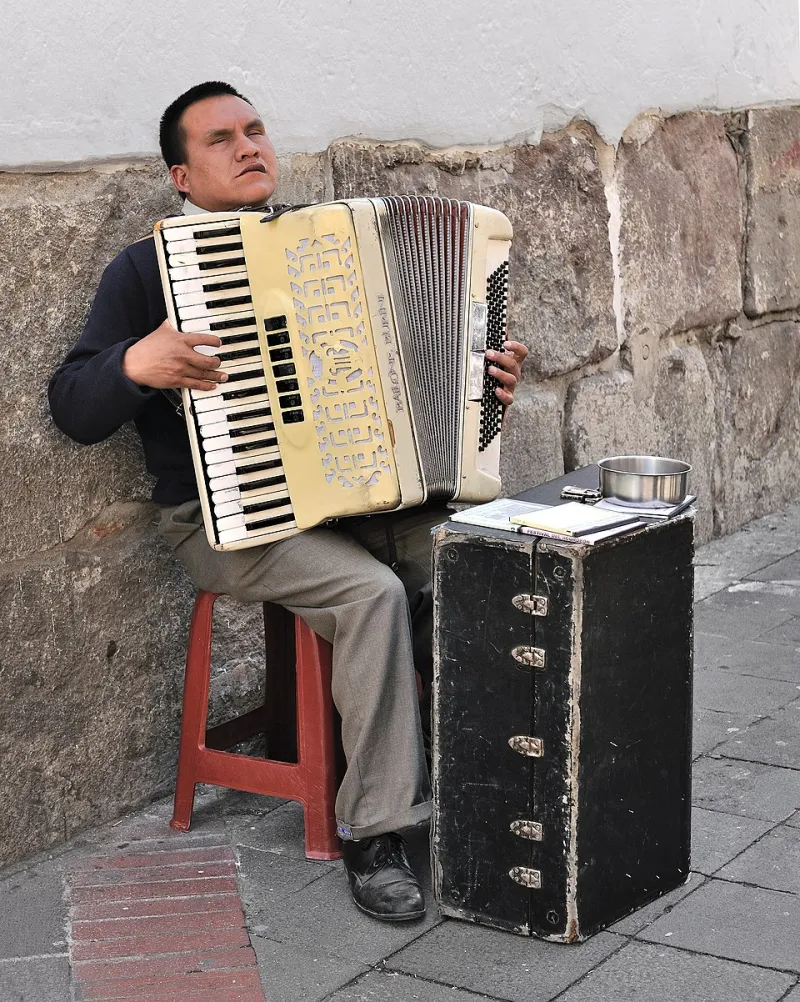
Photo: Lisa Sonia (Li), CC0, via Wikimedia Commons
There's this story we keep telling ourselves about creativity — that it belongs to the young, the restless, the ones who blow up before they're old enough to rent a car. We celebrate the 19-year-old with a viral debut. We mythologize the garage band that made it before anyone had a mortgage. And quietly, without meaning to, we make everyone else feel like they missed the window.
But spend any real time in creative communities — the ones that actually make things, not just talk about them — and you start noticing a different pattern. The artists doing the most interesting work? A lot of them are in their 30s. And a lot of them got here the long way around.
The Myth of the Early Peak
Pop culture loves a prodigy. It's a cleaner story. But for every artist who explodes at 22 and sustains it, there are hundreds who either burn out fast or spend years quietly building toward something that doesn't fully arrive until much later.
Psychologists have a name for this: the creative maturation curve. Research out of Northwestern and the University of Chicago has suggested that creative breakthroughs often come in two waves — one early, driven by raw energy and novelty-seeking, and one later, driven by depth, synthesis, and what researchers call "experiential capital." That second wave? It tends to hit somewhere in the 30s.
In plain terms: you can't fake having lived through something. And that realness shows up in the work.
When the False Start Is Actually the Foundation
Talk to enough creators who found their voice later, and you'll hear a version of the same story. There was a first chapter — a band that didn't make it, a creative direction that felt borrowed, a career pivot that looked like failure from the outside. And then, after some time and some distance, something clicked.
Jordan, a producer based out of Atlanta who spent his mid-20s grinding for placements that never landed, describes the shift plainly: "I was making music for what I thought people wanted. I was chasing a version of success I'd seen somebody else have. When that stopped working, I had to figure out what I actually sounded like."
That process of figuring it out — of stripping away what's performed and getting to what's real — takes time. It takes failure. It takes a few years of doing the thing badly before you understand why it wasn't working.
The false start isn't wasted. It's research.
Patience as a Creative Tool
One of the underrated advantages of making it to your 30s with your creative ambitions still intact is that you've already survived disappointment. You know what it feels like to pour yourself into something and have it land quietly. You've learned how to keep going anyway.
That resilience changes how you work. You're less reactive. You're more willing to sit with an idea, let it breathe, come back to it. The desperation to be seen — which can produce some brilliant early work, sure — tends to soften into something more intentional. More patient.
Mia, a visual artist and muralist from Chicago, put it this way: "In my 20s I was always rushing to finish things so I could show them. Now I'm more interested in whether the piece is actually done. Those are really different questions."
That distinction — between wanting to be finished and actually being finished — might be one of the most valuable things experience teaches a creative person.
You Know Who You're Talking To Now
Another shift that happens with time: you get clearer on your audience. Not in a marketing sense, but in a human one. You understand who you're making things for, why it matters to them, and what you're actually trying to say.
Early creative work is often about figuring out your own identity. Which is valid — that tension produces real art. But there's a different kind of depth available when you've already done some of that internal work and you can turn outward. When you're making something not just to express yourself but to genuinely connect with someone else.
That's the shift that tends to build real, lasting audiences. Not the ones who found you when you were trending, but the ones who feel like you made something specifically for them.
The Industry Doesn't Always See It Coming
Here's the honest part: the music industry, the art world, the content ecosystem — none of them are particularly good at recognizing or rewarding this kind of development. The infrastructure is still built around early discovery, youth as a selling point, the narrative of overnight success.
That means a lot of artists who are doing their best work in their 30s are doing it without the co-sign they would have gotten a decade earlier. Which is frustrating. But it also, weirdly, creates a kind of freedom.
When the industry isn't watching, you stop performing for it. You make things because you mean them. And audiences — real ones, not algorithmic ones — can tell the difference.
Derek, a singer-songwriter from Nashville who released his most critically received record at 34 after two forgotten albums in his late 20s, says the lack of hype actually helped him: "Nobody was expecting anything from me. I had nothing to protect. I just made the record I would've wanted to hear at the worst point in my life. Turns out other people needed that too."
Being Here Now, Actually
There's something the Mono Is Here ethos keeps circling back to — this idea of presence, of actually being in the moment of creation rather than performing the idea of it. And that quality of presence? It's genuinely harder to access when you're young, hungry, and anxious about where you're headed.
The artists who find their voice in their 30s often describe a version of the same thing: they stopped trying to become something and started being what they already were. The work got quieter in some ways, louder in others. More specific. More true.
That's not a consolation prize for missing the early window. That's a different kind of arrival — one that tends to stick.
The Takeaway
If you're in your 30s and feel like you're still figuring it out, still finding your footing, still not where you thought you'd be by now — you might actually be right on time. Not in a motivational poster way. In a real, documented, psychologically supported way.
The work you make now, shaped by everything you've been through, might be the work that actually lasts. The audience you build from here might be the one that actually stays.
The comeback nobody expected might just be the story you were always supposed to tell.