Broke, Tired, and Making Magic: Why the Best Creative Work Happens When You Have Almost Nothing
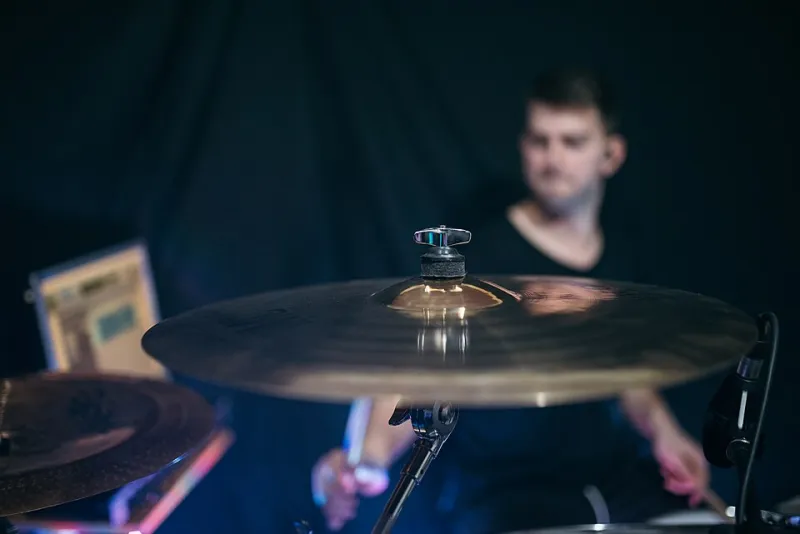
Photo: Shixart1985, CC BY 2.0, via Wikimedia Commons
There's a version of the creative process that looks like a movie montage — golden-hour light, a perfectly organized studio, endless time, and inspiration that flows like water from a tap. And then there's the version most of us actually live: it's late, you're exhausted, your setup is held together with a USB hub and a prayer, and somehow — somehow — you make something that genuinely surprises you.
That second version? That's where the real stuff lives.
Creators across music, visual art, and pretty much every other discipline have been quietly discovering the same truth for decades: constraints don't block creativity. They ignite it. And if you've been waiting for the perfect conditions to make your best work, this might be the sign to stop waiting and start limiting yourself on purpose.
The Bedroom Studio Isn't a Setback — It's a Setup
Before Frank Ocean had a label budget, before Billie Eilish had a Grammy, there was a bedroom. A laptop. Maybe a cheap interface and whatever microphone was available. The lo-fi aesthetic that defined a generation of indie and alternative music wasn't a stylistic choice at first — it was a necessity that became a signature.
When you're working in a tight space with limited gear, something interesting happens: you stop obsessing over perfection and start chasing feeling. You can't spend three hours tweaking reverb on a vocal when your roommate wakes up at 6 AM and you need to wrap. The clock forces decisions. Decisions create character. Character is what makes people actually connect with your work.
Producers who got their start flipping beats on cracked software versions will tell you the same thing — the limitations of the tools shaped the sound. When you can't do everything, you figure out what actually matters.
The Psychology of Scarcity (And Why Your Brain Secretly Loves It)
There's real science backing this up. Researchers studying creative cognition have found that constraints activate what's called cognitive reappraisal — basically, your brain is forced to reframe a problem when the obvious solution isn't available. Instead of reaching for the default answer, you start hunting for the unconventional one.
Think about it like this: if someone hands you a fully stocked kitchen and tells you to cook dinner, you might spend twenty minutes just deciding where to start. Give someone a can of chickpeas, some garlic, and a pan, and they'll make something specific and intentional — because they have to.
The same mechanic plays out in a studio at 3 AM when your plugin subscription just expired and you've got four hours before you have to be somewhere. You're not browsing presets. You're making decisions. And decisions, even imperfect ones, are what move a piece of work from idea to reality.
One Instrument, One Rule, One Session
Some creators have started imposing constraints deliberately — not because they have to, but because they've seen what happens when they do.
There's a growing movement among independent musicians who set what they call "one-tool sessions" — an entire track built from a single synth, or a full EP recorded using only acoustic instruments with no overdubs allowed. The rules feel arbitrary until you're inside them. Then they feel like the only way to work.
Visual artists do it too. Painters who limit themselves to a three-color palette. Illustrators who commit to a single pen weight. Photographers who shoot only on film with no digital backup. The constraint becomes the creative container, and something about working inside a defined edge makes the work feel more cohesive, more intentional, more alive.
One Brooklyn-based producer — who's been quietly building a following by dropping constraint-based beat challenges online — described it this way: "When I tell myself I can only use samples I recorded on my phone today, I stop thinking about what's 'good' and start thinking about what's interesting. That's the shift."
That shift is everything.
Deadlines Are a Love Language
Let's talk about time constraints, because they might be the most powerful limitation of all — and the one creators resist the hardest.
There's a reason so many artists describe their best work as something that came together fast. Not because fast equals good, but because a tight timeline eliminates the enemy of all creative work: infinite revision. When the deadline is real — when the show is tomorrow night, when the submission window closes at midnight, when your collaborator is flying back to LA on Sunday — you stop second-guessing and start committing.
Perfectionism is often just fear wearing a productivity costume. A hard deadline rips the costume off.
Some creators have started manufacturing artificial deadlines for themselves — posting a "dropping something Friday" tweet before they've even started, just to create external accountability. It's a little chaotic, sure. But it works. The work gets made. And often, it's better than the stuff they spent three months agonizing over.
Scarcity as a Creative Identity
Here's the part that tends to surprise people: the work made under constraints doesn't just turn out good. It often turns out distinct. The limitations leave fingerprints.
When you're working with less, you develop workarounds. Workarounds become techniques. Techniques become your style. Style is what makes people recognize your work in a playlist or a gallery or a feed without seeing your name attached. It's the thing you can't buy or manufacture — it has to be discovered through the process.
Some of the most recognizable sounds in modern music came directly from someone making do. The gritty, compressed textures of early hip-hop came from producers working with samplers that had severe memory limits. The raw, intimate feel of singer-songwriter recordings that blew up on streaming platforms came from artists who couldn't afford session musicians and had to figure out how to fill the space alone.
The constraint didn't just produce the work. It produced the voice.
Start With Less Tonight
You don't have to wait for a crisis to work this way. You can choose it.
Pick one rule before your next session. One instrument. One hour. One color. One microphone placement and no adjustments. Give yourself an edge to work inside and see what happens when the only option is to go deeper instead of broader.
The 3 AM sessions that change everything don't happen because everything is perfect. They happen because something is missing — and you had to find a way through anyway.
That's where Mono lives. Not in the overflow, but in the focus. Not in having everything, but in going all in on what you've got.
Create with what's here. Right now. That's enough.