Night Owl Nation: The Creative Magic That Only Happens After Midnight

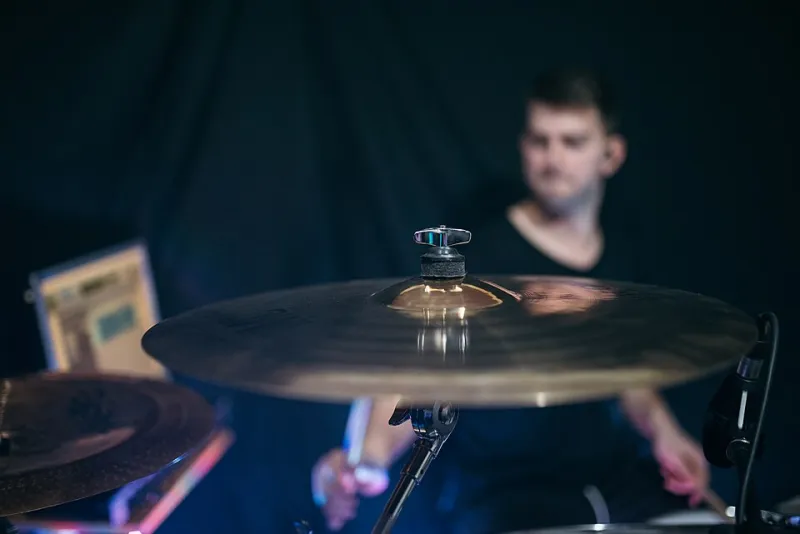
Photo: Icebreaker_Stephan_Jantzen_in_Stadthafen_Rostock_2010-12-28.jpg: Grand-Duc derivative work: Grand-Duc (talk), CC BY-SA 3.0 de, via Wikimedia Commons
There's a specific kind of silence that settles in around 2 or 3 in the morning. The notifications stop. The group chats go dark. The ambient noise of everyone else's life — their opinions, their timelines, their expectations — fades out completely. And for a whole community of creators, that silence isn't emptiness. It's an open door.
If you've ever caught yourself doing your best work while the rest of your city sleeps, you're not alone — and you're definitely not weird. You might just be wired differently. Or, more accurately, you might be giving your brain exactly what it needs.
What's Actually Happening in Your Brain at 2 AM
Sleep researchers have a name for people who naturally peak later in the day: evening chronotypes. And while the 9-to-5 world isn't exactly built for them, science increasingly suggests that late-night hours offer a genuinely different cognitive environment — not just a quieter one.
When you're tired but not yet fully exhausted, your prefrontal cortex — the part of your brain responsible for self-editing, second-guessing, and overthinking — starts to ease up. The internal critic gets drowsy before you do. What's left is something looser, more associative, more willing to connect dots that your daytime brain would dismiss as too strange or too risky.
Dr. Cynthia May, a cognitive psychologist who has studied creative cognition, has described this state as a kind of "mental diffusion" — where focused, goal-oriented thinking gives way to broader, more wandering thought patterns. It's the same phenomenon behind why you get your best ideas in the shower. Except at 3 AM, the shower lasts for hours.
For artists, that looseness is currency.
"Daytime Me Edits. Nighttime Me Creates."
Tamika, a singer-songwriter based in Atlanta, has been producing music out of her home studio since 2019. Her schedule would horrify most productivity coaches. She starts writing around 11 PM and rarely wraps before 4 AM.
"During the day I'm answering emails, running errands, thinking about what I have to do next," she says. "By midnight, all of that is gone. I'm not performing for anyone. I'm not thinking about whether a song is going to do numbers. I'm just in it."
She describes a specific feeling that kicks in around 1 AM — a kind of emotional rawness she can't access any other time. "Things feel more real at night. Like you've taken off a layer of armor you didn't even know you were wearing."
That tracks with what psychologists call reduced social monitoring — the brain's tendency, when fatigued and unstimulated by external input, to care less about judgment. You stop performing and start feeling. For a songwriter, that's the whole ballgame.
The Distraction Factor — And Why It's Bigger Than You Think
Here's something worth sitting with: the average American checks their phone 96 times a day. That's roughly once every ten minutes during waking hours. Every one of those checks is a context switch — a tiny interruption that pulls your brain out of deep focus and forces it to reorient.
Creative flow — the state where ideas come fast and feel inevitable — requires sustained attention. Researchers suggest it takes anywhere from 15 to 25 minutes of uninterrupted focus just to enter a flow state. Do the math on a day full of notifications, and you start to understand why so many artists feel like they can't get traction until the world goes quiet.
Marcus, a visual artist and muralist out of Chicago, puts it bluntly: "In the daytime, I'm always half-somewhere-else. At night, I'm 100% in the room. That's when the work actually happens."
He's been painting large-format canvases in his studio apartment from 10 PM to 3 AM for the better part of five years. His most recognized pieces — the ones that got him commissions and gallery interest — were all made in that window. "I don't think that's a coincidence."
The Ritual Matters As Much As the Hour
It's not just the time itself — it's what the time represents. For most nocturnal creators, late nights have become a ritual, a psychological signal that says: this is sacred space. The hour is almost a costume you put on. When the clock hits midnight, something in you knows it's time.
Jordan, a fiction writer in Brooklyn who works on his debut novel after his kids go to sleep, describes it as "the only part of the day that belongs to me." From 11 PM to 2 AM, he writes. The rest of his life — parenting, his day job in marketing, all of it — exists outside that window.
"I used to feel guilty about it," he admits. "Like I was supposed to be the person who wakes up at 5 AM and journals. But that was never me. This is me. And the work I do in those hours is the best writing I've ever done."
The ritual creates a container. And containers — clear, consistent, protected — are what allow creative risk-taking to happen.
Honoring Your Rhythm Without Wrecking Your Health
Let's be real: there's a version of this that goes wrong. Romanticizing the exhausted, sleepless artist is a trap, and it's one that's sent a lot of talented people into burnout spirals. Chronic sleep deprivation isn't a creative superpower — it's a health risk.
The key is intentionality. If you're a natural night owl, the goal isn't to force yourself into a morning-person mold — it's to build a life that respects your actual rhythm. That might mean protecting your mornings for rest, being honest with collaborators about your schedule, or finding work that doesn't demand you perform at 8 AM.
Some practical ground rules from the creators we spoke to:
- Set an end time and honor it. Even if the work is flowing, know when to stop. 4 AM can become 6 AM can become a broken sleep schedule in a hurry.
- Don't create every night. Night sessions are high-intensity. You need recovery time. Two or three focused late nights a week beats seven exhausted ones.
- Protect your sleep on the back end. If you're working until 3 AM, sleeping until 10 or 11 isn't laziness — it's maintenance.
- Tell the people in your life. If your schedule runs counter to the people around you, communication prevents friction.
Be Here Now — Even If "Now" Is 3 AM
There's something deeply aligned with what Mono Is Here is all about in all of this. Being present. Creating from a real place. Letting the work come from somewhere honest rather than performing productivity for an audience that isn't even watching.
The night strips all of that away. There's no one to perform for. No algorithm to feed. No one checking whether you're being consistent or on-brand. It's just you and the work, in the dark, figuring out what you actually have to say.
For a lot of creators, that's the only time they ever really find out.
So if you're the person who comes alive after midnight — stop apologizing for it. Stop trying to fix yourself into a schedule that was never designed for how your brain works. The night isn't a problem. It might be exactly where you're supposed to be.